
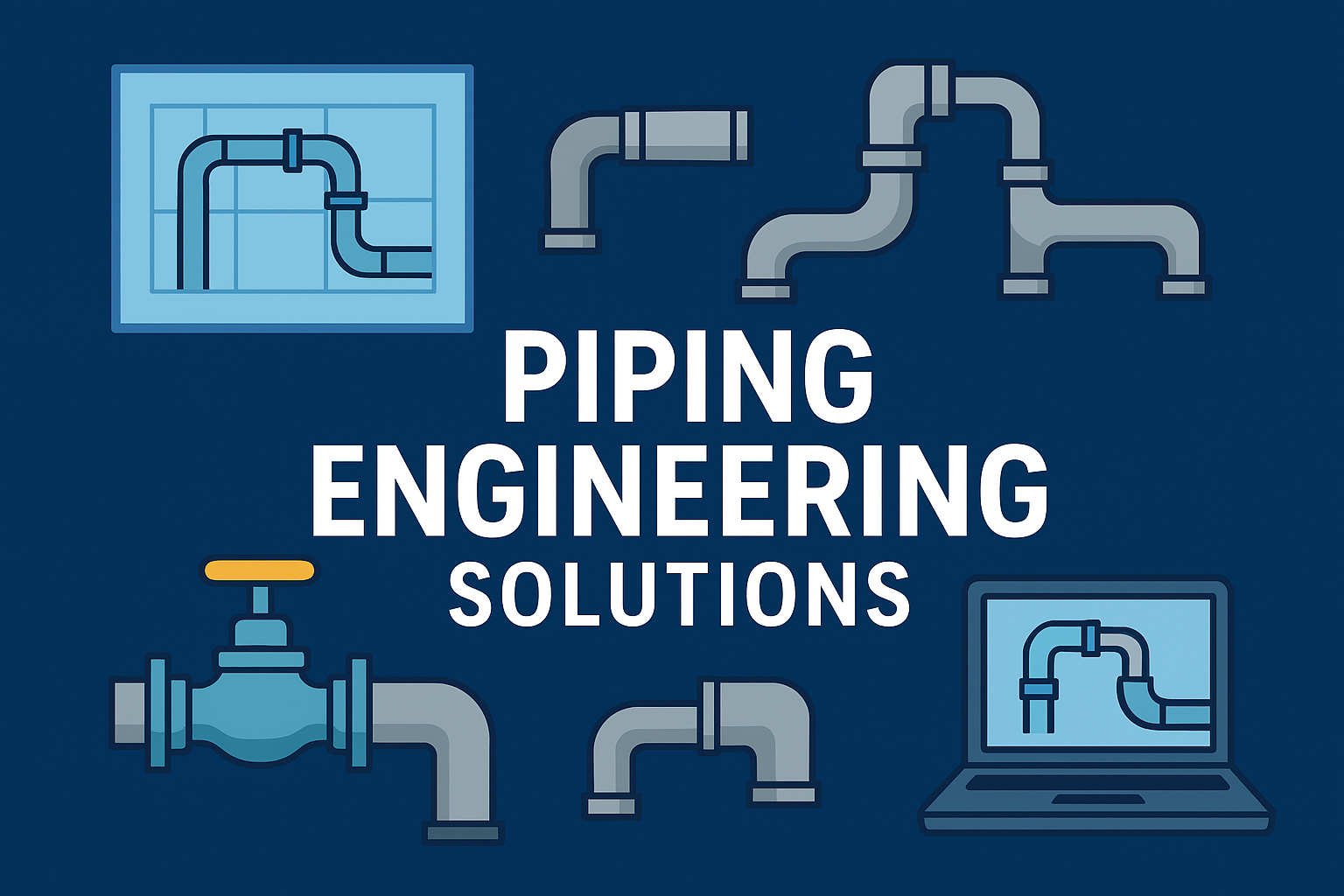
Piping Engineering Solutions – Enhancing Industrial Safety, Reliability & Performance In every industrial facility, whether it is oil and gas, petrochemical, manufacturing, or water treatment,...
Modern buildings demand more than just functional systems. They require precise, well-coordinated Mechanical, Electrical and Plumbing (MEP) services that integrate seamlessly into the architectural and structural framework. As building design becomes increasingly data-driven, 3D coordination has become central to how we deliver reliable, efficient systems that perform as expected.
At Ellipsoid Designs, we bring MEP services to life through intelligent modelling, accurate detailing and collaborative workflows. This article explores the journey from early-stage design to construction-ready deliverables, showing how 3D coordination improves clarity, efficiency and buildability across every phase.
What Are MEP Services?
MEP services form the backbone of a building’s internal systems. Mechanical systems include HVAC, ventilation, and plant equipment. Electrical covers lighting, power, fire alarms and containment. Plumbing addresses drainage, hot and cold water, and pipework.
Together, these disciplines are responsible for safety, comfort and utility. Designing them in isolation is no longer practical. That’s why integrated MEP design, backed by 3D coordination, is the standard on most projects today.
Our MEP engineering approach combines technical design with a clear understanding of buildability. We factor in installation access, maintenance zones and space planning from the earliest stages.
Coordinating MEP Services from Concept to Detailed Design
At Ellipsoid Designs, we start by translating performance criteria into schematic layouts. These layouts define general routes and zones for services, enabling early coordination with structural and architectural teams.
We then develop the design in Autodesk Revit, a 3D environment that supports multi-disciplinary modelling. As we refine system layouts, we validate spatial allowances, confirm access clearances and embed technical specifications.
This phase includes collaboration with structural engineers to avoid clashes and optimise space usage. Our goal is to turn draft layouts into coordinated, constructible designs that reflect real-world constraints.
We also liaise with clients and consultants to align our system performance assumptions with their project goals. This ensures that the MEP solution is not only technically viable but also commercially and operationally sound.
The Role of 3D Coordination in MEP Workflows
3D coordination brings together architectural, structural and MEP models into a shared environment. Using platforms such as Navisworks, we run clash detection and lead coordination meetings with project stakeholders.
By identifying conflicts early, such as a duct intersecting a beam or a pipe crossing a light fitting, we resolve issues before they become on-site delays. Each clash is documented, assigned and tracked until resolved in the model.
This process enables faster approvals and reduces reliance on RFIs. For contractors, this means fewer surprises and a more predictable installation programme.
Through each coordination review, we maintain model accuracy and traceability. Our structured process allows teams to address the most critical issues first, keeping key milestones on track.
Producing Drawings from Coordinated MEP Models
Once coordination is complete, we produce MEP design drawings directly from the 3D model. These include plans, sections and schematics that reflect the latest agreed model status.
Because the model holds all geometric and performance data, drawings remain aligned with design intent. We can quickly update sheets if changes occur, without starting from scratch. This efficiency reduces errors and supports tight project schedules.
In addition to design drawings, we also prepare construction-level documentation that supports on-site delivery and trade sequencing.
We include annotations, fabrication notes and installation guidance in these deliverables to reduce interpretation errors and increase on-site productivity.
Fabrication and As-Built Outputs for MEP Services
Our process doesn’t stop at design. We support projects through construction and beyond, using the model to produce as-built drawings that reflect actual installation.
For prefabrication, we align outputs with supplier requirements, including annotated views and schedules. This ensures MEP components are ordered and installed correctly, reducing material waste and improving procurement timelines.
When needed, we integrate scan to BIM data to verify on-site conditions and adjust designs accordingly. This is especially useful in renovation or retrofit scenarios.
We also support phased handovers and soft landings by structuring our deliverables for both construction and facilities teams. This makes ongoing operations and asset management easier.
Benefits of 3D Coordination for MEP Services
There are clear benefits to using 3D modelling for MEP services. These include:
- Reduced design clashes and revisions
- Better collaboration across disciplines
- Faster approvals through visual coordination
- More reliable installation sequences
- Increased confidence from the site team
Coordination also supports compliance, as the model includes key regulatory and performance data embedded in each system. This ensures alignment with specifications and improves quality assurance.
It also provides a valuable tool for stakeholder engagement. Clients can explore the coordinated model and better understand spatial impacts, which helps drive informed decisions.
Real-World Coordination in Action
We have applied our 3D MEP coordination process across a variety of sectors, from commercial developments and data centres to healthcare and education.
On a recent office fit-out, early model reviews revealed major conflicts between ductwork and structural beams. By resolving these issues digitally, we helped the contractor avoid costly ceiling rework and kept the handover on schedule.
In another project, our coordinated model served as the foundation for prefabricated modules. This reduced site labour and improved safety by moving complex installations off-site.
In the education sector, our early engagement process helped align stakeholder expectations, reduced the risk of late changes and supported successful project closeout.
Why Choose Ellipsoid Designs for Coordinated MEP Delivery
Our MEP team understands both the technical and practical demands of construction. We use proven tools and workflows to improve clarity, reduce error and maintain control from design to delivery.
Whether you’re planning a new build, retrofit or phased rollout, we deliver coordinated designs that integrate seamlessly into your programme. Our models serve not just as drawings, but as practical tools for construction, operation and maintenance.
Our experience in live environments, prefabrication, and design-for-manufacture ensures that our models are both realistic and buildable.
To learn more about how our MEP coordination process can improve your next project, contact us today.